Why Water Quality Matters for Data Center Cooling Performance

Why Water Quality Matters for Data Center Cooling Performance

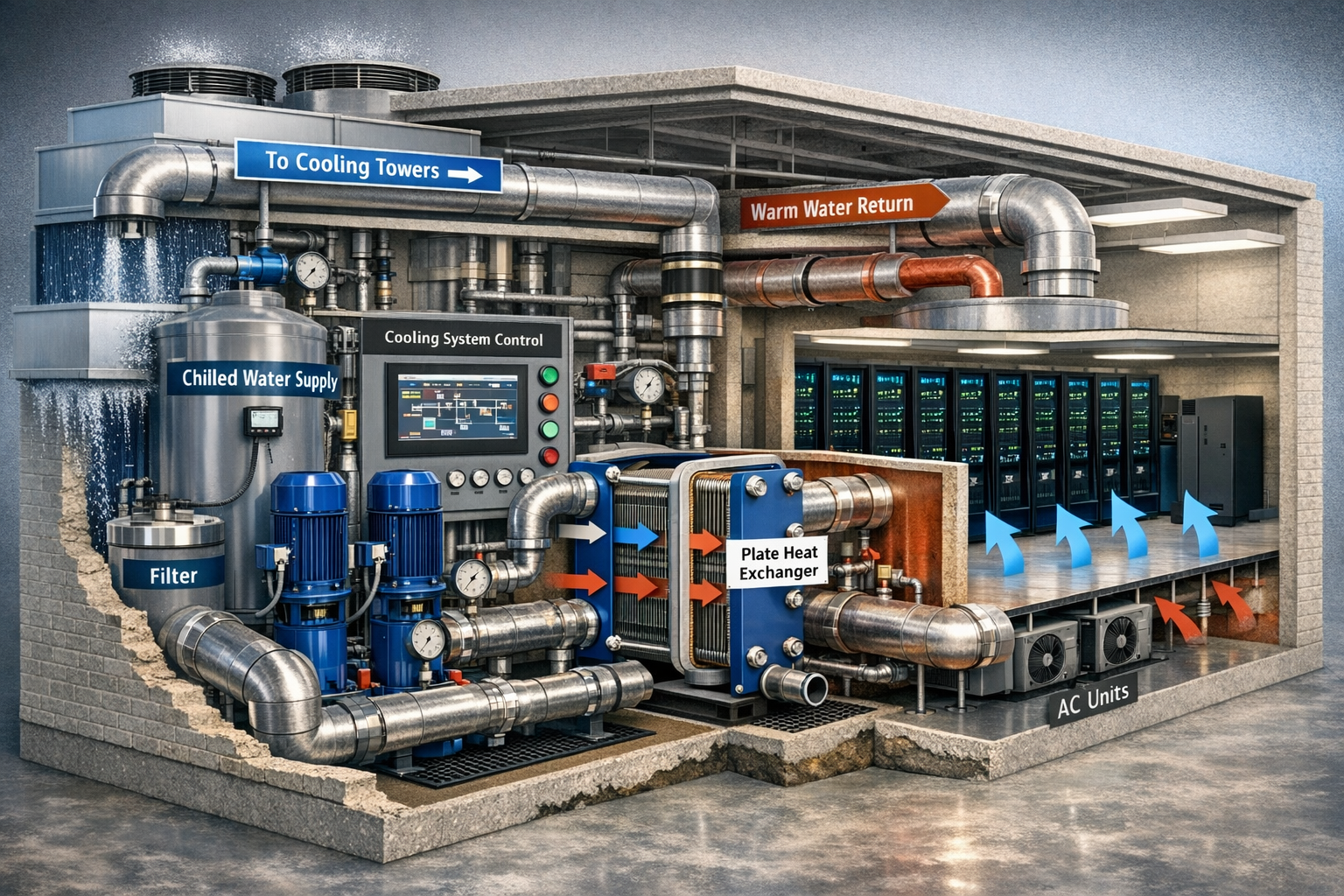
Data centers are the foundation of modern digital infrastructure, supporting the expanding demands of cloud computing, artificial intelligence, and large-scale data storage. As these facilities operate high performance servers, effective heat management is essential. Liquid cooling systems have emerged as a preferred approach due to their superior efficiency over traditional air based methods, making water cooled data centers increasingly common. This post examines how water quality influences the performance and longevity of data center water cooling systems, and why maintaining high quality water is critical for ensuring operational reliability and energy efficiency. It also highlights several data center water filtration and treatment solutions offered by Graver Technologies to optimize data center performance.

The Rise of the Liquid-Cooled Data Center

Air cooling was the standard for decades, but rising rack densities and processor thermal loads have pushed air's limits. Today, the liquid cooled data center is rapidly becoming the industry norm. Liquid cooling transfers heat far more efficiently than air, enabling tighter rack configurations, higher compute density, and significant energy savings.

However, liquid cooling systems introduce a new layer of operational complexity. Unlike air, water interacts chemically with every surface it touches, such as pipes, heat exchangers, pumps, and server components. When water quality is poor, those interactions can quietly erode your infrastructure from the inside out, compromising your system’s performance and longevity.

Understanding the Risks of Poor-Quality Water in a Liquid-Cooled Data Center

The primary risks associated with poor water quality in a liquid-cooled data center include:

  • Corrosion: Dissolved oxygen, aggressive pH levels, and ionic contaminants attack metal surfaces in pipes, heat exchangers, and cold plates. Corrosion produces particulates that circulate through the system, causing further damage and blockages.
  • Biological Growth: Bacteria and biofilm can colonize cooling loops, particularly in open-loop or cooling tower systems. Biofilm acts as an insulator, reduces flow rates, and can lead to microbiologically influenced corrosion (MIC).
  • Galvanic Corrosion: When dissimilar metals are used in a cooling loop (a common scenario in modern data center infrastructure), poor water chemistry accelerates electrochemical reactions between those metals, leading to accelerated material degradation.
  • Scaling and Fouling: Hard water rich in calcium and magnesium carbonate deposits scale on heat transfer surfaces. Even a thin layer of scale dramatically reduces thermal conductivity, forcing the system to work harder to achieve the same cooling effect.

Left unaddressed, any of these conditions can result in unplanned downtime, costly component replacement, or, in severe cases, catastrophic system failure.

Why Water Treatment for Data Centers Is Non-Negotiable

Implementing robust water treatment for data centers is a fundamental part of responsible liquid cooling data center operations. Effective water treatment for data centers involves multiple layers of protection:

  1. Filtration Systems: Multi-stage filtration removes suspended solids, sediment, and particulates before they even enter the cooling loop. Cartridge filters and automatic self-cleaning strainers are commonly deployed in data center water cooling systems to protect sensitive heat exchange equipment.
  2. Water Softening: Ion exchange softeners replace calcium and magnesium ions with sodium, preventing hard water scale formation. This is particularly critical for facilities using municipal water sources with high mineral content.
  3. Chemical Treatment: Corrosion inhibitors, scale inhibitors, and biocides are carefully dosed to maintain water chemistry within target ranges. Advanced treatment programs may include dispersants to prevent particle agglomeration and pH buffers to stabilize system conditions.
  4. Reverse Osmosis and Deionization: For liquid-cooled data center applications requiring ultra-pure water, reverse osmosis (RO) and deionization (DI) systems remove dissolved minerals and ions to near-zero conductivity levels, eliminating scale and corrosion risks.

How Water Quality Increases Energy Efficiency and Reduces Operating Costs

Here’s how maintaining optimal water quality can have a significant impact on energy efficiency in data centers and operating costs:

  • Optimized Heat Transfer for Reduced Energy Consumption: High-quality water, free from contaminants and impurities, ensures that the liquid cooling data center system can effectively transfer heat away from servers. When water is clean, with minimal mineral content, it can absorb and transport heat more efficiently.
  • Reduction in Scaling and Corrosion to Minimize Maintenance Costs: With regular water treatment, such as softening, filtration, and pH adjustment, data center water cooling systems can prevent scaling and corrosion, which minimizes maintenance costs and prolongs the lifespan of the equipment.
  • Improved System Longevity: Maintaining high water quality ensures that the cooling system operates smoothly for a longer period. A water-cooled data center with clean, conditioned water will experience fewer mechanical failures and require less frequent maintenance, which translates into significant cost savings over time. The system’s efficiency remains high, reducing the likelihood of system downtime that could lead to additional energy and repair costs.

Best Practices for a Data Center Water Cooling System

Whether you operate a direct liquid cooling (DLC) setup, a rear-door heat exchanger system, or a cooling tower-based chilled water plant, the following principles apply to any data center water cooling system:

  • Establish a water quality baseline before commissioning any new cooling system.
  • Understand the source water chemistry, the materials in your cooling loop, and the operating temperature and pressure ranges.
  • Define target water quality parameters for your specific system and work with a filtration and treatment specialist to design a program that maintains those targets under varying conditions.
  • Install appropriate filtration at all system boundaries including strainers, depth filters, and fine filtration to protect heat exchangers and cold plates from particulate damage.
  • Conduct regular water sampling and analysis monthly testing at minimum, with more frequent sampling during system startup or after any significant changes to load, chemistry, or flow rates.

Partner with specialists who understand the intersection of fluid dynamics, materials science, and data center operations. Water treatment in data centers is not the same as water treatment in industrial process or HVAC contexts; tolerances are tighter, and the consequences of failure are more immediate.

Data Center Water Filtration and Water Treatment Solutions by Graver Technologies

As water quality specifications tighten across hyperscale and high-density data center environments, filtration performance and footprint efficiency have become critical design considerations. Graver Technologies offers purpose-engineered filtration solutions designed specifically for modern liquid-cooled data center applications.

  • High Flow Filtration for Large Volume Cooling Loops: Graver’s High Flow cartridge filters have become a primary solution for large-volume cooling systems where space is limited. These filters deliver:
    • High flow rates with a significantly smaller footprint
    • Reduced housing requirements
    • Lower changeout frequency
    • Simplified maintenance access
    • In large, chilled water and cooling loop systems, High Flow filters allow EPCs and hyperscale operators to maintain stringent particulate control without the large geometry systems traditionally used in industrial water applications.
  • Membrane Filters: In applications where particulate specifications become more stringent, particularly in direct liquid cooling (DLC) systems or high-density rack environments, membrane filtration may be required. Graver’s WaterTEC™ and ZTEC™ B membrane filters provide fine particulate and colloidal control, stable and predictable filtration performance, and compatibility with chemically treated cooling loops. Membrane systems also require properly designed prefiltration to prevent premature fouling and extend membrane service life.
  • Prefiltration and Pre-RO Solutions: Effective prefiltration becomes essential where membrane or reverse osmosis (RO) systems are specified, even in cases where RO is only being evaluated at the design stage. Graver Technologies offers depth cartridge prefilters to protect membrane systems, high-efficiency particulate removal ahead of RO units, and customized filtration trains designed around load profiles and system chemistry.
  • Side-Stream and Full-Flow Configurations: Depending on system design, Graver has products that can be used in both:
    • Side-stream filtration, providing continuous contamination control with lower capital investment
    • Full-flow filtration, ensuring 100% of recirculating water is treated to protect critical cooling components

Partnering for Performance and Reliability

Water treatment in data centers requires tighter tolerances than traditional HVAC or industrial water systems. Material compatibility, flow dynamics, and contaminant control must all be evaluated holistically. Graver Technologies works directly with EPC firms, hyperscale operators, and data center engineers to design filtration systems that align with:

  • Cooling architecture
  • Water chemistry targets
  • Space constraints
  • Maintenance strategies

To learn more about Graver’s high flow, membrane, and prefiltration solutions for liquid-cooled data centers, visit: https://www.gravertech.com/data-thermal-solutions.

需要帮助吗?

您可以使用我们的工具或通过我们的聊天机器人找到合适的应用程序或产品。

保持联系

随时关注我们的最新消息和公告。您可以随时取消订阅。

Thank you! Your submission has been received!
Oops! Something went wrong while submitting the form.